Cardiac apprehension does not await a hassle-free minute. It can happen at Lake Wendouree throughout an early morning run, on a building website in Delacombe, or in your home on a silent Sunday. When it occurs, the end result hinges on 3 things you regulate: the rate of your compressions, the depth you attain, and how much time you keep going before assistance takes over. The scientific research is clear, therefore is the strategy, however under pressure the details can slip. This guide distills what issues for CPR in Ballarat, grounded in present guidelines and the truths you deal with on the street, in the workshop, or on the farm.
If you have already taken an emergency treatment course in Ballarat, great. If you have not, take into consideration scheduling a session. A few concentrated hours on a manikin build muscle memory you can not obtain from analysis, and regional trainers make a distinction when they shape drills around regional job and sports risks. Whether you discovered with Emergency treatment Pro Ballarat, through a CPR course Ballarat homeowners advise, or an additional company, refresher courses maintain your abilities sharp and your confidence steady.
The crucial triad: price, deepness, duration
People keep in mind the wide strokes: press hard and fast, do not quit. Yet survival depends upon specifics.
How quick: Aim for 100 to 120 compressions per minute. That cadence produces enough onward blood circulation without exhausting you also quickly. Faster is not far better beyond this array. People that accelerate to 140 per min often tend to do careless compressions and do not allow full upper body recoil, which cuts coronary blood flow.
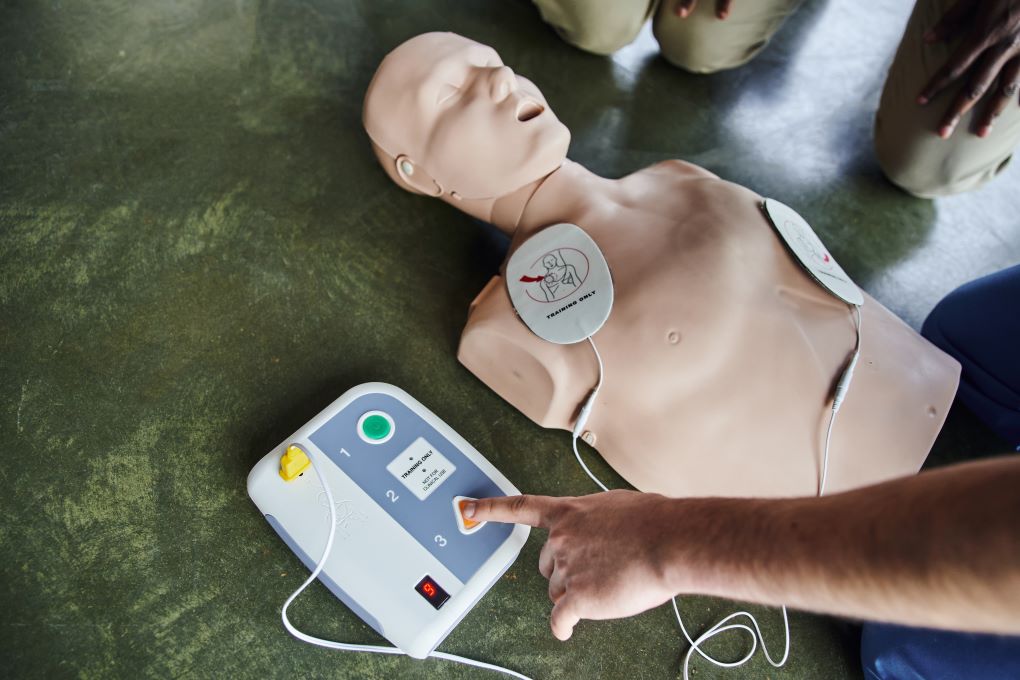
How deep: Press at the very least one third of the upper body depth, concerning 5 to 6 centimetres in an ordinary grownup. Depth is not a hunch in training. On a manikin with feedback, you can feel what 5 cm really indicates. On an actual person it differs with body type. Slim or older grownups usually need less force to reach the exact same deepness. Overweight or muscle breasts require firmer pressure. What matters is that each compression gets to that 5 to 6 centimeters target and you permit the chest to spring back totally before the following push.
How long: Proceed till the person shows clear signs of life, a defibrillator suggests say goodbye to shocks and a medical care expert telephone calls a stop, or educated aid takes control of. In real terms that commonly implies 10 to 30 minutes of cycles in a public setting. If an automated outside defibrillator is applied within the first few minutes and reveals a shockable rhythm, your efforts might be shorter, however you should be prepared to keep going. In rural areas outside Ballarat, waiting for a rescue can extend beyond 15 mins. Turning of rescuers matters in those cases.
These numbers come from strong proof. Fees listed below 100 or above 120 compressions per min are associated with even worse end results. Depths less than 5 cm do not produce appropriate perfusion in grownups. Midst past 6 centimeters increase the threat of rib cracks without purposeful survival advantage. There are exceptions in edge situations, like small-statured adults or when compressions on a really soft surface sink energy right into a cushion, yet the target ranges are still your anchor.
Getting the arrangement right when seconds matter
Before you touch the upper body, set up for success. The initial 30 secs you spend on positioning and a clear plan can settle in mins of efficient resuscitation.
Lay the individual flat on a firm surface area. If they get on a couch or a soft bed, move them to the flooring. On a grassy flooring, you get adequate recoil. On a mattress, also a healthcare facility bed, compressions shed deepness and recoil, so slide a hard board underneath if one is available.
Kneel next to the breast with your shoulders directly above your hands. Pile your hands on the lower half of the breastbone, not on the ribs. Lock your elbow joints. Position your knees close enough that you can lean your body weight right down over the sternum, not push with your arms. Using your body weight maintains the depth constant and hold-ups fatigue.
Strip or open clothing if you need to place AED pads. If there is a lot of breast hair where the pads have to go, use the razor in the AED package to promptly shave those areas. Damp skin from sweat or water around Windermere or the pool ought to be towel-dried for pad attachment. If a nitroglycerin patch or various other transdermal medicine patch lies under a pad placement site, remove it with a gloved hand to avoid electric arcing and make sure great contact.
For Ballarat workplaces where high-vis and coats prevail, prepare for quick accessibility. A little trauma shears in the office emergency treatment kit can conserve precious secs. Training that simulates garments removal pays off when you require it.
The compression technique you can rely on under pressure
Once your hands remain in location, compress the upper body at that 100 to 120 per min rhythm. Press directly down 5 to 6 centimeters, after that release completely to enable the chest to recoil. Full recoil issues more than many individuals realize. Imagine squeezing a sponge then allowing it full of water. If you do not let it spring back, the following press has much less to progress. Leaning on the chest in between compressions blunts this refill. Keep your hands in call however raise your stress throughout the recoil phase.
Count aloud or in your head. Many people use tunes to hold the 100 to 120 speed. Choose something you can hum immediately, and technique during a CPR correspondence course Ballarat teachers use. The objective is consistency. Individuals frequently start solid, dip comprehensive after a min, then quicken to make up. Feedback devices in modern-day manikins are efficient training against that drift.
If you have a companion, swap every two minutes, which associate AED rhythm checks. Two minutes has to do with 5 sets of 30 compressions with breaths or approximately 200 to 240 continuous compressions in hands-only mouth-to-mouth resuscitation. Also in shape individuals lose deepness after two minutes. Set a timer on a phone if a spectator can manage it, or revolve at the AED prompts if readily available. Smooth shifts keep blood circulation steady. Aim for much less than 5 secs of disturbance during a changeover.
Hands-only or rescue breaths
For adults with a sudden collapse, hands-only mouth-to-mouth resuscitation works well in the initial few mins. Many grownups in heart attack have a cardiac origin. Their blood is still oxygenated early, so compressions that flow that oxygen are the top priority. Bystanders are most likely to start and keep choosing hands-only mouth-to-mouth resuscitation, which conserves lives.
There are circumstances where breaths matter a lot more:
- Drowning or near-drowning, consisting of lake or swimming pool cases. These victims typically endure hypoxia first. Rescue breaths might improve results if you are educated and willing. Paediatric situations. Children's apprehensions are frequently breathing in origin. For babies and youngsters, compressions with breaths are advised if you have training. The compression deepness shifts to concerning one third of the chest, roughly 4 centimeters in infants and 5 cm in little kids, with various hand techniques. Drug overdose and asphyxiation. When oxygen has been low for a while prior to collapse, blending in breaths can assist if you are educated and have a barrier device.
If you offer breaths, make use of a 30 compressions to 2 breaths ratio for a solitary rescuer on grownups. Tilt the head back, lift the chin, pinch the nose, and give each breath over one 2nd, just till the chest increases. Avoid big, fast breaths, which inflate the stomach and rise regurgitation risk. If you have 2 rescuers and you have a bag-valve mask, a single person seals the mask with both hands while the other squeezes the bag, collaborating with compressions. That requires technique. Many Ballarat first aid courses hang around on mask method due to the fact that a great seal makes the difference.
For several area members in Ballarat, an emergency treatment and CPR course Ballarat service providers supply will certainly lead with hands-only mouth-to-mouth resuscitation to obtain people comfy acting. Adding breaths is a valuable step for those prepared to go deeper and for work environments where an oxygen set or bag-valve mask is available.
The AED is your colleague, not a distraction
An AED transforms the formula. Early defibrillation is the single greatest web link in the chain of survival for shockable rhythms. In Ballarat, AEDs are progressively readily available in shopping center, sports clubs, institutions, and bigger offices. Some show up in wall surface closets near major entryways with clear signage. During an emergency treatment course in Ballarat, ask your trainer to mention common places or show you the regional AED computer registry. If your work environment or club does not have one, push for it. The cost is small contrasted to the threat account of many neighborhood sites.
When an AED gets here:
- Turn it on promptly and comply with the voice triggers. The units are designed for ordinary rescuers and will certainly guide pad positioning and analysis. Do not stop briefly CPR to unbox the gadget. One person continues compressions while another opens up the instance, tears open pads, and reveals the chest. Apply pads to bare, dry skin. Area one pad high on the right breast, simply listed below the collarbone, and the various other on the left side of the chest, a hand-span listed below the underarm. If the breast is sweaty or damp, towel off prior to pad placement. If a pacemaker lump rests under the pad location, put the pad at least a few centimetres away. Stop compressions just when the AED tells you to stand clear for rhythm analysis or shock shipment. As soon as the shock is supplied, resume compressions without checking for a pulse. The gadget will reanalyse in two minutes.
Do not stress over hurting the person with a shock they do not need. The AED will just provide a shock if the rhythm is shockable. Your task is to make sure pads get on and compressions proceed with very little pauses.
Special factors to consider in Ballarat settings
A city like Ballarat has diverse risk profiles: heritage homes with high stairs, industrial workshops, showing off ovals, and ranches on the borders. Each establishing forms just how you prepare and exactly how you respond.
Workshops and building and construction: High-noise atmospheres make communication hard. In training, method clear, brief commands. Appoint functions early: compressor, AED operator, caller to Triple No, and somebody to satisfy paramedics at the gate. Ear protection and handwear covers can slow you down, so present your emergency treatment and CPR packages where they are simple to get. In Ballarat emergency treatment training, many trainers mimic sound and crowding so you learn to run under pressure.
Sports areas: Abrupt cardiac arrest throughout sport is rare but real. Trains and fitness instructors should know where the ground's AED sits and guarantee it is accessible throughout training and games. For juniors, keep in mind the paediatric pad setting if the AED has one. If it does not, use adult pads however position them anterior-posterior if the child's upper body is tiny. Clubs that invest in a CPR training Ballarat session often combine it with a defib drill and time themselves from collapse to initial shock. Aim for under three minutes.
Rural residential or commercial properties: Range is the challenge. Feedback times outside the CBD can stretch. Family members and employees ought to know each other's medical conditions, consisting of any kind of implanted defibrillator, and maintain AEDs and first aid packages in recognized places. Some Ballarat first aid courses cover prolonged resuscitation and managing tiredness when you are the only rescuer. Strategies like switching knee placements to save your reduced back and using a metronome application to maintain rate are straightforward but valuable.
Cold atmospheres: Winters in Ballarat get brisk, and hypothermia adjustments the picture. If the person is cold and damp, insulate as best you can while preserving access to the breast. Hypothermia can protect the brain somewhat, so long term mouth-to-mouth resuscitation can be worthwhile. The AED will still suggest shocks when suitable. If the individual is significantly hypothermic, defibrillation might be less efficient until they heat, however you still adhere to the prompts.
Crowded public areas: Spectators frequently intend to assist but do not recognize what to do. Offer specific tasks. You call Three-way Zero and stay on the line. You get the AED from the wall. You clear area and keep people back. You time the cycles and call the switch at two minutes. When individuals have a job, they add rather than distract.
Quality over heroics: staying clear of the common mistakes
Under tension, great objectives can slip into routines that decrease mouth-to-mouth resuscitation top quality. Experts of emergency treatment and CPR courses Ballarat broad will certainly acknowledge these pitfalls.
Shallow compressions: Fatigue is the primary culprit. You start at 5 to 6 cm and drift to 3 to 4 centimeters after a min or more. Rotate rescuers early. If you are alone, reset your posture. Knees more detailed, shoulders over hands, utilize your body weight.
Incomplete recoil: Leaning on the chest in between compressions really feels consistent, particularly on a slippery or moving surface. It chokes off coronary blood flow. Knowingly lift your pressure on the upstroke. In training, watch a responses tool to feel the difference.

Excessive disruptions: Every pause drops perfusion and takes several compressions to rebuild. Do not stop to inspect pulses or to take a look at the individual's face after each cycle. Count on the AED's rhythm checks. Prepare the air passage and breaths while community cpr courses Ballarat compressions continue, after that slip in 2 breaths and resume.
Overventilation: Too much air, as well fast, elevates intrathoracic pressure and lowers venous go back to the heart. Offer each breath over one second, simply sufficient to see the chest increase, then stop. If unsure and you are not comfortable with breaths, stick with hands-only CPR.
Slow hands during AED triggers: New rescuers in some cases freeze once the device shows up. Keep compressions going up until the AED advises you to stand clear. After a shock, do not wait to see if they awaken. Start compressions again. The two-minute blocks are your rhythm.
Safety and permission realities
If a person is unresponsive, not taking a breath generally, and has no noticeable indications of life, you have actually implied consent to begin mouth-to-mouth resuscitation. In workplaces and neighborhood settings in Victoria, the Good Samaritan securities cover people who give aid in an emergency situation in excellent confidence and without foolhardiness. That consists of using an AED. You are not anticipated to be best, just reasonable.
Safety initially. Scan the setting quickly. Live electrical risks, fire, automobile website traffic, and unstable frameworks can turn you into a second casualty. Move the person only if required to make the scene risk-free. If the collapse happens on hard-packed soil or crushed rock, placed a coat under the head to decrease injury throughout compressions, but do not make the surface area soft under the chest.
Be conscious of social and individual boundaries, yet do not allow hesitation prevent activity in a life hazard. If a family member is present, a calm sentence assists: I am learnt CPR. I am going to aid currently. Please call Three-way No and bring the AED if there is one. That clarity steadies the scene.
How real training develops the edge
Nothing alternative to pushing a manikin and sensation what 5 to 6 cm in fact is. A good Ballarat first aid course will certainly test your assumptions. It will show you exactly how rapidly 2 minutes passes when you get on your knees, and exactly how messy clothes and sweat can make easy actions feel complicated. It will certainly also provide you the self-confidence to lead when others freeze.
There is a difference in between inspecting a box and building proficiency. Seek training courses that include:
- High-quality manikins with feedback on depth and recoil, not simply fundamental torsos. Multiple situations that mirror Ballarat life, from a collapse on Sturt Road to a near-drowning at a dam. AED practice with various models, consisting of pad placement on man and female chests and paediatric options. Honest coaching on exhaustion monitoring and rotation under genuine timing constraints.
Many companies provide a first aid certificate Ballarat residents can finish in a single day for HLTAID011 Give First Aid, with the CPR element HLTAID009 frequently available as a shorter update. If you are brief in a timely manner or need the CPR certification for your duty, a concentrated CPR course first aid training in ballarat Ballarat sessions run in the evening or on weekend breaks are useful. For those who have actually not exercised in a while, a CPR refresher course Ballarat trainers deliver yearly is not simply a governing tick. It is a tune-up that can restore depth, cadence, and confidence.
If your organisation collaborates emergency treatment training in Ballarat, ask for scenario-based sessions and request modules that match your context. Friendliness places benefit from choking and AED drills in limited rooms. Industrial websites ought to experiment handwear covers, boots, and background noise. Institutions require paediatric focus. Customizing turns basic skills right into suitable skills.
When the person is not taking a breath normally
Agonal gasps are deceptive. They are uneven, laboured, and occasionally audible to deceive spectators right into assuming the individual is taking a breath. They are ineffective breaths. If a person collapses and afterwards takes a couple of gurgling, taking breaths at lengthy periods, deal with that as no breathing. Begin compressions. In every emergency treatment and CPR course Ballarat facilitators reinforce this, since hesitation here sets you back minutes.
Seizure-like motions can additionally occur during heart attack. If they break down, stiffen, or jerk, then go limp and unresponsive without normal breathing, take into consideration heart attack and begin CPR. Do not invest precious time finding out whether it was a seizure first. Airway control and compressions take priority.
Aftercare: what takes place after a resuscitation attempt
If the individual gains back indicators of life before paramedics show up, position them on their side in the recuperation position while checking breathing. Maintain the AED connected. Devices will continue to keep an eye on and trigger if a shockable rhythm returns. Individuals commonly vomit as they get up. Transform the head to secure the airway.
Be all set for intense feeling. Family members may sob or shout. Rescuers often drink or feel faint. Delegate care: a person comfort the household, a person fetches water and blankets, a person flags down the rescue. List crucial times if you can: collapse, CPR beginning, first shock, signs of life. Paramedics worth those details.
You may feel aching for days after providing quality compressions. Tender wrists and a rigid back prevail. That discomfort is the price of pushing to 5 to 6 centimeters for minutes on end. It means you did the job that gives a person an actual chance.
If the outcome is not what you really hoped, keep in mind that also perfect mouth-to-mouth resuscitation is not an assurance. The goal is to get time, not to amazingly restart a heart. Talk with your group or family later. Several emergency treatment training suppliers in Ballarat can debrief informally if you reach out, and bigger workplaces may have accessibility to staff member help programs.
Quick fact checks that help you act faster
The rhythm in your head: 100 to 120 per minute is vigorous. If you can not hold that speed for two mins without losing kind, change your body position or button earlier. During training, test songs or a metronome app and choose one that you can recall under stress.
Depth on a soft surface: If you can not move the person off a soft bed or couch, slide something rigid under the breast area: a reducing board, a company tray, even a folded up door if available. In the area, we have made use of pool kickboards by the water. Anything that resists compression helps.
Breaths or no breaths: If you have a barrier gadget and the situation suggests a respiratory reason, include breaths. If you are uncertain, hands-only is much better than pausing to deliberate. Start compressions currently, and add breaths later on if educated assistance arrives.

AED positioning on a big chest: On extremely wide or barrel chests, make certain pad sides do not fold. If needed, place pads anterior-posterior, one on the facility of the upper body and one on the back below the left shoulder blade.
Jewellery and chest piercings: Do not lose time eliminating them, however stay clear of putting pads directly over steel. A small change around a nipple ring or chain pendant resolves the problem.
Building a more powerful regional chain of survival
Ballarat has a neighborhood fabric that appears when needed. The more individuals who understand what 100 to 120 per minute feels like, and what 5 to 6 cm truly is, the stronger that material becomes. If you run a club, a café, or a workshop, take into consideration scheduling a session with a local supplier offering first aid training Ballarat vast. If your certification schedules for renewal, book a CPR refresher course. If your family members hangs around around water, include drowning-specific technique to your plan.
A couple of sensible steps connect it together:
- Map AEDs in your regular rooms: home block, work environment, gym, sports ground, favorite café. Set calendar suggestions for annual mouth-to-mouth resuscitation refreshers and three-year full emergency treatment renewals. Encourage your group to finish a first aid and CPR course Ballarat trainers supply, then run short internal drills every quarter. Check your first aid sets and AED regular monthly. Replace pads and batteries prior to they expire. Maintain razors, scissors, and towels in the AED case.
The numbers are simple: 100 to 120 per min, 5 to 6 centimeters deepness, two-minute cycles with marginal disturbances. The judgment includes practice. Ballarat emergency treatment courses make that technique genuine. When the moment shows up, your hands will know what to do, which understanding can transform a collapse into a survival story.